BMW Front Left Driver Seat Top Half 202.BM1I91
fits model: 318i, E30, 318is, 325is. make: Bmw. year: 1984–1991.
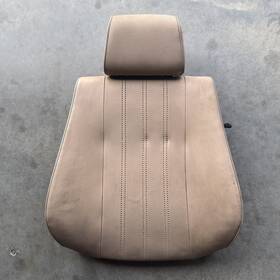
( Manufacturer Part Number: 318I ), ( Part Type: Driver Seat ), ( Conditions Options: Sedan, E30, Ivory, Leather ), ( Color: Beige ), ( Genuine Oem: Yes ), ( Material: Leather ), ( Placement On Vehicle: Driver Side, Left ), ( Ipn: 202.bm1i91 ), ( Manufacturer Warranty: 60 Day )
Review BMW Tan Beige Front Left Driver Leather Seat Top Half fits 318I E30 318IS 325IS 1984–1991
The **BMW E30 318is/325is (84-89) front left driver s seat top half (part number 202.BM1I91)** represents a meticulously crafted component from one of the most iconic and sought-after generations of BMW s compact sports sedans. This section of the driver s seat, designed for the **M10B27 (318is) and M10B30 (325is) engines** produced between 1984 and 1989, embodies the perfect blend of ergonomic precision and classic BMW craftsmanship. Crafted from high-quality, durable materials, the seat top half features a **contoured, supportive structure** tailored to provide optimal comfort and driving posture, allowing for both long-distance cruising and spirited performance driving. The upholstery, typically in **full-grain leather or premium vinyl**, exhibits a timeless elegance with its **deep, rich stitching** and **smooth, buttery-soft texture**, ensuring a luxurious feel that complements the car s sporty yet refined character. The **adjustable headrest** and **ergonomic padding** are designed to reduce fatigue during extended drives, while the **reinforced stitching and durable webbing** ensure longevity, even with frequent use. This seat half is a **direct-fit replacement**, meaning it aligns perfectly with the original E30 s seat frame, maintaining the car s authentic handling dynamics and driver engagement. Whether restoring a classic 318is or a 325is to its original glory or upgrading an existing seat for enhanced comfort, this part preserves the **unmistakable BMW driving experience** where precision engineering meets timeless design. Ideal for collectors, enthusiasts, and restorers, it stands as a testament to BMW s commitment to performance and luxury in the mid-1980s.
### **Pros and Cons of Buying a 1984-1989 BMW E30 318is/325is (BMW 202.BM1I91, Front Left Driver Seat Top Half)**
#### **Pros**
1. **Classic BMW Driving Experience**
The E30 series is widely regarded as one of BMW s most driver-focused and enjoyable cars of the era. The 318is (M104 engine) and 325is (M108 engine) offer a well-balanced mix of power, handling, and precision steering, making them a favorite among enthusiasts.
2. **Strong Engine Options**
- The **318is (M104)** produces around **143 hp** (depending on tuning) and is a reliable inline-4 engine when properly maintained.
- The **325is (M108)** delivers **170 hp** (M108B25) or **190 hp** (M108B25E, later models), offering more power and torque for better acceleration and towing capability.
Both engines are known for their smoothness and durability when kept in good condition.
3. **Timeless Design and Build Quality**
The E30 s styling is iconic, with a sporty, angular look that remains desirable today. The interior, while basic by modern standards, features high-quality materials (leather, wood trim, and metal accents) that age well.
4. **Mechanical Simplicity and Repairability**
Compared to modern electronics-heavy cars, E30s are relatively straightforward to work on. Many parts are still available, and mechanics familiar with BMWs of this era can diagnose and fix issues efficiently.
5. **Strong Aftermarket Support**
The E30 community is vast, with extensive aftermarket parts (performance upgrades, suspension kits, exhausts) and a wealth of knowledge available online. Tuning options like **Bosch L-Jetronic upgrades, turbo kits, or engine swaps** (e.g., S14 M20B20) are popular.
6. **Potential for Modifications**
- **Engine:** Upgrading to a **M20B20 (S14) or M104/M108 turbo** can significantly increase power.
- **Suspension:** Lowering springs, coilovers, or poly bushings improve handling.
- **Exhaust:** Free-flowing systems enhance performance and sound.
- **Interior:** Aftermarket seats, steering wheels, and gauges can modernize the cabin.
7. **Lower Running Costs (Compared to Modern Cars)**
- Fuel efficiency is decent for its class (around **18-22 MPG** depending on driving style).
- Basic maintenance (oil changes, brake jobs) is affordable.
- Parts are cheaper than those for newer BMWs.
8. **Nostalgia and Collectibility**
For many, owning an E30 is about the **nostalgic appeal** and being part of a legendary BMW chapter. Well-preserved examples can appreciate in value, especially rare variants (e.g., early 325is, M-tuned models).
---
#### **Cons**
1. **Aging Mechanical Components**
- **Transmission:** The **Getrag 213 (5-speed manual)** is robust but can wear out over time, especially if not maintained properly. Automatic models (ZF 5HP24) are less common but can be finicky.
- **Suspension:** Bushings, shocks, and control arms degrade over time, leading to a rough ride or handling issues.
- **Brakes:** Drum brakes on early models (pre-1987) are weak; later models get discs up front, but still require frequent pad and rotor replacements.
2. **Rust and Bodywork Issues**
- The E30 is prone to **rust**, particularly in the **floor pans, wheel arches, and rear quarter panels**. A thorough inspection is essential.
- Some models (especially later E30s) had **poor welds** in production, leading to structural weaknesses.
3. **Electrical Reliability Problems**
- Early E30s (pre-1985) had **basic electrical systems** that can fail over time (faulty wiring, relays, or sensors).
- Later models improved but still suffer from **alternator failures, starter issues, and dashboard glitches**.
- **Immobilizer (1987 )** can be a pain if keys are lost or misplaced.
4. **Fuel System Challenges**
- **Carbureted models (pre-1987)** are less efficient and require more maintenance than later **fuel-injected** versions.
- **Bosch L-Jetronic injectors** can clog or fail, leading to rough idling or poor performance.
- **Fuel pumps** are a common failure point, especially in older cars.
5. **High Maintenance Requirements**
- Unlike modern cars with scheduled maintenance reminders, E30s require **regular attention**:- **Timing belt** (if equipped) or **chain** (M108) should be checked.
- **Water pump, thermostat, and hoses** need replacement before failure.
- **Spark plugs, wires, and distributors** (if equipped) should be serviced every 30k-50k miles.
- Neglecting maintenance leads to **expensive repairs** (e.g., blown head gaskets, seized engines).
6. **Limited Modern Safety Features**
- No **airbags, ABS, or modern crash structures** these cars were built in an era with minimal safety standards.
- **Rear visibility** is poor due to the large rear window and lack of side mirrors (on some models).
7. **Insurance and Registration Costs**
- Classic car insurance is available but can be **more expensive** than standard policies.
- Some regions have **higher registration fees** for older or modified vehicles.
8. **Market Variability and Scams**
- The classic car market has **many poorly maintained or restored E30s** sold as "restored" when they re not.
- **Mileage fraud** is common always verify service records.
- Some sellers **overstate condition** (e.g., claiming a rust-free car when it s not).
9. **Parts Availability (But Not Always Reliable)**
- While parts are widely available, **quality varies**. Some aftermarket components are cheap but poorly made.
- **Original BMW parts** can be expensive, especially for rare models.
10. **Driving in Modern Traffic**
- The **manual transmission** can be tiring in stop-and-go traffic.
- **No power steering assist** (on early models) makes parking and maneuvering harder.
- **Heating/AC systems** are less efficient than modern ones.
---
### **Conclusion**
Buying a **1984-1989 BMW E30 318is/325is** is a **fantastic choice** if you:- **Love classic BMWs** and enjoy the driving dynamics.
- **Plan to maintain it properly** (or have mechanical skills).
- **Are okay with some quirks** (electrical issues, rust, manual maintenance).
- **Want a project car** that can be modified and restored over time.
- **Appreciate the aftermarket support** and community.
However, it is **not ideal** if you:- **Want a plug-and-play, low-maintenance car**.
- **Can t afford unexpected repairs** (e.g., transmission, suspension, electrical).
- **Prioritize modern safety and comfort**.
- **Don t enjoy working on cars** or finding reliable mechanics.
---
### **Recommendation**
If you re serious about buying an E30, follow these steps:1. **Choose the Right Model**
- **325is (M108) is preferable** over the 318is for better power and reliability.
- **Avoid early 1984 models** (first-year bugs, weaker brakes).
- **Fuel-injected models (1987 )** are more reliable than carbureted ones.
2. **Inspect Thoroughly**
- **Rust check:** Look under the car, wheel arches, and rear quarter panels.
- **Mechanical check:** Test **transmission, suspension, brakes, and electricals**.
- **Service history:** Verify **oil changes, timing belt/chain service, and major repairs**.
- **Test drive:** Listen for **unusual noises, check steering feel, and test acceleration**.
3. **Budget for Maintenance**
- Expect to spend **$1,000 $3,000/year** on maintenance if not self-sufficient.
- Set aside **$5,000 $10,000 ** for unexpected repairs (e.g., engine rebuild, transmission swap).
4. **Consider a "Project Car" vs. "Ready-to-Drive"**
- A **well-documented, low-mileage E30** (under $8,000 $12,000) may need minor work but is a better buy.
- A **fully restored E30** (over $15,000 ) is great if you want a ready-to-drive classic.
5
Details:
BMW E30 Tan Beige Front Left Driver Sport Seat Back Top Half 84-89 318Is 325IS. Shipped with USPS Ground Advantage. Condition is Used.
specifications seainterio:
- for models: 318i, E30, 318is, 325is
- for makes: Bmw
- for years: 1984-1991
- mpn: 318i
- part type: Driver Seat
- conditions options: Sedan, E30, Ivory, Leather
- color: Beige
- genuine oem: Yes
- material: Leather
- placement on vehicle: Driver Side, Left
- ipn: 202.bm1i91
- manufacturer warranty: 60 Day
payments seainterio:
- credit card: Diners-club
- other
- wallet: Paypal
seller seainterio:
- rating: 97.7%
- # reviews: 1015
- city: McKinney, Texas
shipping seainterio:
- cost: $142.00
- transit: 3-7 Days
- carrier: USPS
- type: Calculated
- service: USPS Ground Advantage
- class: Standard
offer seainterio:
- quantity: 1
- best offers: True
- sold: 0
- started: April 7, 2026
- availability: In Stock
- options: Ship-to-home
returns seainterio:
- policy: No Returns
general seainterio:
- condition: Used
- Interior Parts Accessories > Seats, Parts Accessories > Seats
Bmw 318I Is Similar To:
- 020-146 4 Genuine Bmw Control Light Seat Safety Belt (27.8% similar) Bmw E21 control light seat safety belt 3'ER please verify part number and connector to ensure fitment. Used item with light wear and blemishes, as seen in the E21 3'ER control safety belt fits 1982 FROM:05 01 1976 TO: ended. Doing this gives us an opportunity to troubleshoot the situation best ...(September 1st, 2018)
- 52-11-1-824-773 Bmw Left Bottom Horsehair Seat Pad Oem (27.6% similar) Left cushion bottom pad oem for bmw ti Ti this is a brand new horsehair straight from Germany. Not many left, possibly discontinued. Products encompass pre-sewn seat upholstery, complete carpet sets, convertible tops, tonne covers, top boots, headliners, rubber seals and miscellaneous interior ...(July 24th, 2018)
- 52-11-1-824-774 Bmw Right Bottom Horsehair Seat Pad Oem (27.4% similar) Brand new, never been taken out of the plastic it came in. Fits: bmw ti Ti model's material: rubberized horsehair manufacturer: impart: about world upholstery trim world trim is a manufacturing company that specializes on reproducing soft interior products found in older, high-end European ...(July 24th, 2018)
- 52-12-1-824-775 Bmw Backrest Horsehair Seat Pad Oem (28.2% similar) Products encompass pre-sewn seat upholstery, complete carpet sets, convertible tops, tonne covers, top boots, headliners, rubber seals and miscellaneous interior panels all made in the USA but sold over world. Not many left, possibly discontinued. Backrest pad oem for bmw ti Ti this is a brand new ...(July 24th, 2018)
- 635csi Driver 633csi Side Seat Leather Bmw (28.6% similar) ...(August 18th, 2015)
- 8198500 Bmw Oem E39 Front (24.1% similar) Up for sale is a oem original bmw E39 5 series seat belt...(October 30th, 2017)
- 2-point Bmw 1974-1976 2002 2002tii Rear Retracting Seat Belts Repa Original (30.1% similar) Bmw 2002 2002 TII E10 probably earlier years as well original reap rear 2 point seat belts very good working condition need cleaned up a bit no cracks or tears missing one bolt washer nut...(August 16th, 2016)
- 69-76 Bmw 1974 2002 Front Seats (31.1% similar) I reserve the right to end this sale at any time. Is the same as above...(April 8th, 2016)
- 64111353351 Bmw Seat Knob Handles Tii Ti Turbo Alpina Free Ship (22.1% similar) Oem free shipping retail is 618, see last pic...(December 18th, 2020)
- Bmw 52106981775 5210-6981775 5210-6-981-775 2011-2016 535i 528i M5 Front Left Seat Rail Track Trim Cover 6981775 (34.8% similar) Color: white.: bmw.: 528I.: F10.: 2011 . Donor vehicle. Ups or FedEx worldwide. Debit/credit card, cash app, venom, belle or cash at pickup.: bmw...(August 12th, 2023)
- Bmw 7015208 2002 2008 745 750 760 Seat Leg Rest Cushion Front Left Oem Gray (33.3% similar) Please verify part number with your unit prior to purchase. Model: bmw 750LI. Please closely inspect pictures. This part also fits: bmw provides incomplete fitment information. As with any used item there may be normal signs of wear and rear present such as scratches, scuffs dirt, etc. Color: ...(September 29th, 2023)