TOYOTA 206.TO1397 Land Headrest Landcruis
fits model: Fj80, Cruiser. make: Toyota. year: 1991–1997.
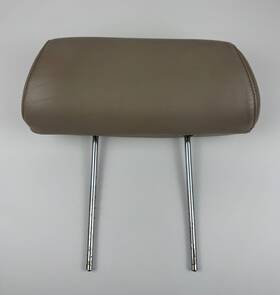
( Model: LANDCRUIS ), ( Conditions Options: Rear Set, Tan Lea, Cn ), ( Headrest Type: Detachable ), ( Color: Beige ), ( Genuine Oem: Yes ), ( Material: Leather ), ( Placement On Vehicle: Rear ), ( Ipn: 206.to1397 ), ( Descriptionpartcondition: Has Creases. Refer To Pictures For Details. )
Review TOYOTA Land Headrest Beige Oem fits CRUISER FJ80 1991–1997
The **Toyota Land Cruiser FJ80 (1991-1997) Headrest** is a rugged, meticulously crafted component designed to enhance comfort and functionality in one of the most iconic off-road vehicles of its era. Produced under the **TO1397** designation, this headrest is engineered to fit seamlessly into the FJ80 s classic bench seat configuration, offering both durability and ergonomic support for long drives on or off the road. Crafted from high-quality, weather-resistant materials, it is built to withstand the harshest conditions whether navigating through dense jungles, rocky terrains, or extreme desert climates where durability and reliability are paramount. The headrest features a sturdy, reinforced frame that ensures stability, preventing sagging or deformation over time, while its padded surface provides a comfortable resting place for passengers, reducing fatigue during extended journeys. Its design aligns with the FJ80 s legendary off-road heritage, blending practicality with a touch of vintage charm. Whether used in a restored classic or a heavily modified off-road rig, this headrest is a testament to Toyota s engineering precision, ensuring that every ride remains as comfortable as it is adventurous. Perfect for enthusiasts who appreciate both form and function, it stands as a reliable upgrade for those who demand nothing less than excellence from their Land Cruiser.
Buying a **Toyota Land Cruiser FJ80 (1991-1997)** particularly a model with a **headrest** (likely a **Toyota 206** or a modified version) has its advantages and disadvantages. Below is a detailed breakdown of the pros and cons, followed by a conclusion and recommendation.
---
### **Pros of Buying a 1991-1997 Toyota Land Cruiser FJ80**
1. **Legendary Reliability and Durability**
The FJ80 is renowned for its robust engineering, designed for harsh off-road conditions. Toyota s reputation for longevity means many of these vehicles still run strong after decades, especially if well-maintained. The simple, no-frills design minimizes points of failure.
2. **Off-Road Capability**
The FJ80 was built for rugged terrain, featuring a **high ground clearance, solid axles, heavy-duty suspension, and a robust drivetrain**. It handles sand, mud, rocks, and steep inclines far better than most modern SUVs. The **206 engine** (a modified 22R-E or 22R-F) is a high-compression, fuel-injected version of the 4-cylinder, capable of producing **120-140 horsepower** with proper tuning.
3. **Mechanical Simplicity**
Unlike modern vehicles with complex electronics, the FJ80 relies on **mechanical components** (manual transmissions, simple fuel systems, and basic electrical systems). This makes repairs easier and cheaper, especially in remote areas where diagnostics are limited.
4. **Strong Secondary Market and Community**
The FJ80 has a **dedicated global community** of enthusiasts, mechanics, and parts suppliers. Finding support, upgrades, and modifications is relatively straightforward. Clubs like **Land Cruiser FJ80 Owners Groups** provide forums, repair guides, and event networking.
5. **Customization Potential**
The FJ80 is highly modifiable. Common upgrades include:- **Engine swaps** (e.g., 2JZ-GTE, 1UZ-FE, or diesel options like the 2L-TE).
- **Suspension upgrades** (longer arms, coilovers, or air suspension for better off-road performance).
- **Exhaust and intake modifications** for increased power.
- **Roll cages, winches, and heavy-duty tires** for extreme off-roading.
- **Fuel tank upgrades** for long-range adventures.
This makes the FJ80 a blank canvas for adventurers and customizers.
6. **Resale Value (Among Enthusiasts)**
While not as valuable as a classic Toyota (e.g., early Hilux or 4Runner), a well-maintained FJ80 retains decent resale value within the **off-road and adventure community**. Restomod versions (modernized but still FJ80-based) can even appreciate in value.
7. **Fuel Efficiency (For Its Class)**
The **206 engine** is more efficient than later FJ80s with the **2F-E or 2F-EH engines**, getting around **12-15 km/l (city) and 18-22 km/l (highway)** with proper maintenance. This is decent for a vehicle of its size and capability.
8. **Low-Cost of Ownership (If Maintained)**
Parts are widely available, and labor costs are lower than for modern vehicles. A well-kept FJ80 can be **cheaper to own long-term** than a new SUV, especially if you perform basic maintenance yourself.
9. **Adventure-Friendly Design**
The **open cargo area, foldable seats, and simple interior** make it ideal for overlanding, camping, and long-distance travel. Many owners use it as a **primary vehicle for remote expeditions**.
10. **Nostalgia and Heritage**
For those who appreciate **classic Toyota ruggedness**, the FJ80 represents a golden era of off-road vehicles. It s a piece of automotive history that continues to inspire.
---
### **Cons of Buying a 1991-1997 Toyota Land Cruiser FJ80**
1. **Age-Related Wear and Tear**
Even the best-maintained FJ80s will show signs of aging. **Rust** (especially in the **floor pans, rocker panels, and rear axle housing**) is a common issue, particularly in humid or snowy climates. A thorough inspection is **essential**.
2. **High Maintenance Requirements**
While simple, the FJ80 **requires regular upkeep** to stay reliable:- **Suspension components** (ball joints, bushings, shocks) wear out over time.
- **Transmission and differential fluids** must be changed frequently (every **50,000-80,000 km**).
- **Brakes** (especially the rear drum brakes) can be weak and require frequent servicing.
- **Electrical issues** (failing alternators, corroded wiring, or bad ground connections) are common in older models.
3. **Poor Fuel Economy Compared to Modern Vehicles**
The **206 engine** is thirsty by today s standards, especially when modified. Expect **lower MPG than a modern SUV**, which can be costly for long-distance travel.
4. **Comfort and Modern Amenities Lacking**
The FJ80 is **not a comfortable daily driver**. Features like:- **Basic interior** (no power windows, air conditioning, or modern infotainment).
- **Rough ride** on paved roads due to stiff suspension.
- **Limited visibility** (especially in rear blind spots).
make it **less suitable for city commuting or long highway trips**.
5. **Parts Availability Can Be Inconsistent**
While parts are widely available, **some components (e.g., rare suspension parts, specific electrical items, or aftermarket upgrades)** may require **international shipping**, increasing costs.
6. **Modifications Can Be Expensive**
Upgrading an FJ80 to modern standards (e.g., **air suspension, turbocharging, or advanced off-road packages**) can be **costly**. A well-modded FJ80 can easily exceed **$50,000 **, making it less accessible for budget buyers.
7. **Insurance and Registration Costs**
Some insurance providers charge **higher premiums** for classic or modified vehicles due to perceived risks. Additionally, **registration fees** for high-value or modified FJ80s may be higher in some regions.
8. **Limited Safety Features**
The FJ80 lacks **modern safety tech** like:- **ABS or electronic stability control**.
- **Airbags** (early models may have none; later ones have driver-side only).
- **Crash-test ratings** (it was never designed for highway safety).
This makes it **less safe for highway use** compared to modern SUVs.
9. **Fuel and Emissions Compliance Issues**
In some countries, **older vehicles face restrictions** on:- **Emissions standards** (may require modifications to pass inspections).
- **Fuel type** (some regions ban leaded fuel, which some FJ80s originally used).
Always check local regulations before purchasing.
10. **Learning Curve for New Owners**
Driving and maintaining an FJ80 is **different from modern vehicles**. New owners may struggle with:- **Manual transmissions** (some FJ80s came with 5-speed manuals).
- **Off-road driving techniques** (proper use of 4WD, diff locks, and recovery gear).
- **Basic mechanical skills** (e.g., changing fluids, diagnosing engine issues).
---
### **Conclusion**
The **1991-1997 Toyota Land Cruiser FJ80 (with a 206 engine) is an exceptional off-road and adventure vehicle**, but it is **not a practical daily driver**. It excels in **remote expeditions, overlanding, and customization**, where its **durability, simplicity, and off-road prowess** shine. However, it requires **significant maintenance, lacks modern comforts, and can be expensive to modify or insure**.
If you are an **enthusiast, adventurer, or someone who values mechanical reliability over convenience**, the FJ80 is a **fantastic choice**. But if you need a **comfortable, safe, and low-maintenance vehicle for daily use**, it is **not the best option**.
---
### **Recommendation**
#### **Buy the FJ80 If:**You are **passionate about off-roading, overlanding, or vehicle customization**.
You **have mechanical skills** or access to a **trusted mechanic** for maintenance.
You **prioritize durability and adventure over comfort**.
You **plan to use it primarily in remote or rugged conditions**.
You **enjoy the community and nostalgia** of classic Toyota ruggedness.
#### **Avoid the FJ80 If:**You **need a daily driver** for city commuting or highway travel.
You **cannot afford regular maintenance** (rust repair, suspension work, etc.).
You **prefer modern safety and convenience features** (ABS, airbags, AC, etc.).
You
Details:
Please double-check the pictures, as theres some variation among these model's. Some scratches stains, but overall good condition for an OEM part that's almost 30 years old. Originally from the second row, but will fit in all From a 1997 Toyota Land Cruiser.
specifications seainterio:
- for models: Fj80, Cruiser
- for makes: Toyota
- for years: 1991-1997
- model: Landcruis
- conditions options: Rear Set, Tan Lea, Cn
- headrest type: Detachable
- color: Beige
- genuine oem: Yes
- material: Leather
- placement on vehicle: Rear
- ipn: 206.to1397
- descriptionpartcondition: Has Creases. Refer To Pictures For Details.
payments seainterio:
- credit card: Mastercard
- wallet: Paypal
- other
offer seainterio:
- availability: In Stock
- started: April 4, 2026
- options: Ship-to-home
- sold: 0
- quantity: 1
seller seainterio:
- rating: 100.0%
- city: Alsip, Illinois
- # reviews: 38
returns seainterio:
- policy: No Returns
shipping seainterio:
- cost: $22.40
- transit: 5-11 Days
- carrier: USPS
- service: USPS Ground Advantage
- class: Standard
- type: Calculated
general seainterio:
- Interior Parts Accessories > Seats, Parts Accessories > Seats
- condition: Used
Toyota LANDCRUIS Is Similar To:
- 30817 Oem 1993-95 Toyota Corolla (20.8% similar) This piece is 63 inches wide. For toyota corolla DX. New old stock oem upholstery fabric. There are 8 yards available. The color is blue. You get one yard 36 l x 63 w for 27...(May 9th, 2017)
- 30818 Oem 1993-95 Toyota Corolla Dx (22.2% similar) Actual item in photos. There are 5 yards available. For toyota corolla DX. New old stock oem upholstery fabric. This piece is 63 inches wide. The color is grey...(February 11th, 2017)
- 30819 Oem Toyota Corolla Dx Upholstery Seat Fabric Taupe Brown (25.4% similar) This piece is 65 inches wide for toyota corolla DX. Actual item in photos. There are 9 yards available. New old stock oem upholstery fabric. You get one yard 36 l x 65 w for 21. The color is taupe...(March 30th, 2018)
- 4013503 Toyota Fj62 Land Cruiser (43.8% similar) Before checking out. FJ40, FJ42, FJ43, FJ45, FJ46, FJ47, FJ55, FJ60, FJ62, FJ80, FZJ80...(February 21st, 2018)
- 4runner Toyota Hilux Front Seat Tan Headrest Head Rest 96-02 (37.1% similar) Toyota 4RUNNER genuine oem tan light brown front seat l f head rest in mint condition...(March 26th, 2016)
- 500-0006 Toyota Fj80 Land Cruiser (43.3% similar) They are in great condition as seen the photos. They will fit FJ80 land cruisers from 1990 to 1997 . These are two tone tan brown 2ND row seats removed from my 1992 land cruiser...(February 5th, 2018)
- 525-246 Toyota Land Cruiser Jump Seat Strap Fastener (46.6% similar) Up for sale arr two brand new jump seat strap fasteners the rear seats of a toyota land cruiser FJ40. Still in the new packaging...(June 5th, 2018)
- 525-490 Toyota Land Cruiser Rear Jump Seat Feet (50.5% similar) I purchased these for a 1973 and 1970 fj but did not use them. Two sets of 4 are available, the price is for one set four pieces. They are brand new. Package of 4 jump seat feet for the rear seats a toyota land cruiser FJ40...(June 5th, 2018)
- 65928-60010 Toyota Oem Landcruiser Fj40 Bj40 (44.4% similar) Set 5 pieces part fitment make model year trim engine toyota land cruiser fast ship parts genuine...(February 22nd, 2017)
- 71480-90g28-06-u Toyota Land Cruiser Landcruiser (44.6% similar) Fits FJ60 land cruisers. TB products. Toyota land cruiser rear bench seat assembly brown used. This seat assembly is in very good condition, will need to be cleaned...(January 12th, 2018)
- 7151260040 Toyota Genuine Land Cruiser Lh Front Bottom Seat Foam (42.2% similar) Genuine LHS front bottom seat foam for toyota 80-SERIES land cruiser part number based on my research it should fit the following model's but please verify fitment your application before purchasing: JAPAN01 1997 TOYOTA FJ80,FZJ80,HDJ81,HZJ81 model dates:matching model's: model options: 1992 FJ80G...(August 8th, 2018)