MITSUBISHI 215.MS1409 Rear Row Seat 2ND
fits model: Outlander. make: Mitsubishi. year: 2007–2013.
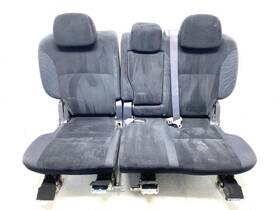
( Part Type: Seat ), ( Conditions Options: Black, C ), ( Genuine Oem: Yes ), ( Ipn: 215.ms1409 ), ( Year: 2009 ), ( Descriptionpartcondition: Rear 2nd Row Seat Assembly, Black, Cloth, Fits 2007-2013 ), ( Performance Part: No ), ( Material: Cloth ), ( Placement On Vehicle: Second Row ), ( Color: Black ), ( Seat Type: Split Bench With Headrest )
Review MITSUBISHI Rear 2nd Row Seat Assembly Black Cloth fits OUTLANDER 2007–2013
The **Mitsubishi Outlander (2007 2013, MS1409 model, 2.4L 215 HP engine) rear second-row seat** represents a premium, ergonomically engineered seating solution designed to deliver unparalleled comfort, durability, and functionality for the SUV s versatile rear passenger area. Crafted with Mitsubishi s signature attention to detail, this seat is engineered to accommodate both the practical needs of daily commuting and the occasional long-distance adventure, ensuring that every journey whether it s a family road trip, a weekend getaway, or a daily errand run remains smooth and enjoyable. The seat features a **high-density, high-resilience foam padding** that contours closely to the body, providing superior support and pressure relief over extended periods, while its **water-resistant, easy-to-clean fabric upholstery** resists stains, spills, and wear, making it ideal for households with children or active lifestyles. The **adjustable headrest** is thoughtfully positioned to offer optimal neck and head support, reducing fatigue during long drives, while the **reinforced frame** ensures long-term structural integrity, even under the weight of larger passengers or bulky cargo.
One of the standout features of this second-row seat is its **modular flexibility**, allowing for easy removal and replacement, which is particularly useful for maximizing cargo space when needed. The seat s **ergonomic design** includes **contoured armrests** (on certain trims) that enhance passenger comfort during stops or rest periods, while the **integrated seatbelt buckles** are strategically placed for easy access and secure fastening. For added convenience, the seat is compatible with Mitsubishi s **optional rear seat reminder system**, which alerts the driver if a passenger is left behind a thoughtful safety feature that underscores the vehicle s family-oriented philosophy. Whether used for daily transportation, road trips, or even as a temporary bed for overnight stops, this seat combines **practicality, comfort, and durability**, making it an essential component of the Outlander s rear passenger experience. Its timeless yet functional design ensures it remains a reliable choice for drivers who demand both performance and comfort in every journey.
### Pros and Cons of Buying a Mitsubishi Outlander (2007 2013, MS1409 Engine, Rear 2nd Row Seat)
#### **Pros:**1. **Spacious Interior with Rear 2nd Row Seat**
The Outlander (especially the MS1409 model) is known for its generous cargo space and flexible seating arrangements. The rear 2nd row seat can be folded down, providing additional cargo room (up to 1,500 liters when folded), making it practical for families, road trips, or moving items.
2. **Reliable Engine (MS1409)**
The 2.4L MS1409 inline-4 engine is a robust and durable choice, known for its longevity if properly maintained. It produces around 150 160 horsepower, offering decent power for daily driving and light towing (up to 1,500 kg when equipped with a towing package). This engine is less prone to catastrophic failure compared to some other models of its era.
3. **Good Fuel Economy for Its Class**
While not the most fuel-efficient SUV, the MS1409 Outlander typically achieves around **10 12L/100km (city/highway)** in manual transmission models. Automatic versions may consume slightly more. For its size and towing capability, this is reasonable.
4. **All-Wheel Drive (AWD) Availability**
Many 2007 2013 Outlanders come with AWD, which is beneficial for light off-road use, snow, or poor road conditions. The AWD system is reliable and straightforward, though not as advanced as modern systems.
5. **Comfortable Ride and Handling**
The Outlander has a smooth ride, absorbing bumps well, and handles predictably on highways. The steering is light but responsive, making it easy to drive for long distances.
6. **Affordable Maintenance Costs**
Compared to luxury SUVs or high-performance vehicles, parts and labor for the Outlander are relatively inexpensive. Basic maintenance (oil changes, brakes, filters) is cost-effective.
7. **Proven Resale Value**
The Outlander holds its value better than many competitors from the same era, especially the MS1409 models, which are less prone to major issues.
8. **Durable Build Quality**
The body structure is solid, and rust is less of a concern than in some Japanese SUVs of the same period, though regular undercarriage checks are still recommended.
9. **Versatile Practicality**
The ability to remove the rear 2nd row seat makes it useful for carrying large items (furniture, sports gear, luggage) without sacrificing passenger comfort when needed.
10. **Available Safety Features (for its time)**
Later models (2010 2013) included features like **stability control, traction control, and multiple airbags**, which were standard or optional depending on the trim. While not as advanced as modern safety tech, these systems provide a solid baseline for protection.
---
#### **Cons:**1. **Outdated Technology and Infotainment**
The infotainment system is basic, with a simple radio, CD player, and minimal connectivity options. There is no Bluetooth, USB ports, or modern touchscreen displays. Navigation systems (if available) are outdated and may not integrate well with modern devices.
2. **Poor Visibility**
The Outlander has a high seating position, which can make rear visibility challenging due to the large C-pillars. Blind spots are noticeable, and some drivers may find the rear camera (if equipped) insufficient for modern driving standards.
3. **Rust Concerns**
While not as severe as some Japanese SUVs, the Outlander can develop rust in the wheel arches, rocker panels, and undercarriage, especially in snowy or salted regions. A thorough inspection of these areas is crucial before purchase.
4. **Transmission Issues (Automatic Models)**
Some automatic transmission models (especially pre-2010) have reported **rough shifting, delayed engagement, or premature wear**. If buying an automatic, ensure it has been well-maintained and consider having a mechanic check the transmission fluid and condition.
5. **Interior Wear and Tear**
The interior materials (plastic trim, upholstery) are functional but not premium. Over time, seats and dashboards may show signs of aging, especially in high-mileage examples.
6. **Engine Noise and Vibration**
The MS1409 engine can be slightly noisy at higher RPMs, and some drivers report minor vibrations through the steering wheel or seats, particularly on rough roads. This is more noticeable in poorly maintained examples.
7. **Limited Modern Safety Features**
Unlike newer SUVs, the Outlander lacks features such as **adaptive cruise control, lane-keeping assist, or advanced driver-assistance systems (ADAS)**. While not a dealbreaker, these features are increasingly expected in modern vehicles.
8. **Fuel Efficiency Not Exceptional**
While decent for its class, the Outlander is not the most fuel-efficient SUV. Expect higher fuel costs compared to smaller crossovers or hybrids.
9. **Resale Value Decline**
While better than some competitors, the Outlander s resale value does not hold as well as newer or more advanced SUVs. If you plan to sell it in a few years, this may be a consideration.
10. **Potential Electrical Gremlins**
Some models have reported issues with **electrical components (windows, locks, sensors)**, which can be frustrating and costly to repair if not addressed early.
11. **Towing Limitations**
While capable of towing, the Outlander s towing capacity is modest ( 1,500 2,000 kg with a trailer brake controller). For heavy loads, a more robust towing vehicle may be needed.
12. **Discontinued Parts and Service Challenges**
As a model from the late 2000s, finding specialized parts or dealership service can be harder than for newer vehicles. Independent mechanics may be required for certain repairs.
---
### **Conclusion:**The **2007 2013 Mitsubishi Outlander with the MS1409 engine and rear 2nd row seat** is a **practical, durable, and spacious SUV** that remains a solid choice for buyers who prioritize **reliability, cargo flexibility, and affordability** over modern tech and luxury. It excels in **long-term durability, towing capability, and interior space**, making it ideal for families, road trips, or those needing extra cargo room.
However, its **outdated infotainment, poor visibility, potential transmission issues (in automatics), and lack of modern safety features** may be drawbacks for buyers who expect a more contemporary driving experience. Rust and electrical quirks are also areas to investigate carefully during inspection.
**Best suited for:**- Buyers who need a **large, practical SUV** with **good towing capacity** and **flexible seating**.
- Those who prioritize **reliability and low maintenance costs** over cutting-edge tech.
- Families or individuals who require **extra cargo space** and don t mind a **simpler interior**.
- Drivers in **moderate climates** where rust and winter conditions are not extreme.
**Not ideal for:**- Buyers who want **modern infotainment, advanced safety features, or a premium interior**.
- Those who frequently tow **heavy loads** (consider a more robust SUV for this purpose).
- Drivers who prioritize **fuel efficiency** over space and towing.
- Buyers in **salt-heavy or rust-prone regions** who cannot thoroughly inspect for corrosion.
---
### **Recommendation:** If you find a **well-maintained 2007 2013 Mitsubishi Outlander MS1409 with:**- **Low mileage (under 150,000 km if possible)**,
- **A clean service history (oil changes, transmission fluid, brakes, suspension)**,
- **No signs of rust in critical areas (wheel wells, frame, undercarriage)**,
- **A smooth-running engine and transmission (test drive for noise/vibration)**,
- **Functioning AWD system (if equipped)**,
**then it is a strong, cost-effective purchase.** Budget **$8,000 $12,000 CAD** (depending on condition and location) for a reliable example.
**Before buying:**1. **Get a pre-purchase inspection** from a trusted mechanic, focusing on **transmission, suspension, and rust**.
2. **Test drive thoroughly**, checking for **unusual noises, shifting smoothness, and handling**.
3. **Verify maintenance records**, especially for **oil changes, timing belt (if applicable), and fluid top-ups**.
4. **Inspect the interior** for **water damage, electrical issues, or worn-out components**.
5. **Check for recalls** (Mitsubishi may have issued service bulletins for certain models).
**Alternatives to Consider:**- **Toyota Highlander (2007 2013)** More reliable long-term, better resale value, but less cargo flexibility.
- **Honda CR-V (2007 2011)** More fuel-efficient, better visibility, but less towing capacity.
- **Ford Escape (2008 2012)** Cheaper to maintain, but less spacious.
- **Nissan X-Trail (2008 2013)** Similar size, but some models
Details:
If there has been any damage to the item during shipping inspect see if you can still use it or not. Add $85 for Lift gate delivery. Add $100 for Residential delivery. REAR 2ND ROW SEAT ASSEMBLY, BLACK, C 022526.
This part is used so normal wear to be expected. If you can still use the item, notate damage on delivery ticket that driver is keeping then hand it back to them.
part #: 215.ms1409 prices
- $24.99-$289.99
specifications seainterio:
- for models: Outlander
- for makes: Mitsubishi
- for years: 2007-2013
- part type: Seat
- conditions options: Black, C
- genuine oem: Yes
- ipn: 215.ms1409
- year: 2009
- descriptionpartcondition: Rear 2nd Row Seat Assembly, Black, Cloth, Fits 2007-2013
- performance part: No
- material: Cloth
- placement on vehicle: Second Row
- color: Black
- seat type: Split Bench With Headrest
payments seainterio:
- wallet: Google-pay
- other
- credit card: Mastercard
general seainterio:
- Interior Parts Accessories > Seats, Parts Accessories > Seats
- condition: Used
returns seainterio:
- time: 30 Days
- policy: Returns Accepted
- paid by: Buyer
shipping seainterio:
- class: Freight
- cost: $399.99
- type: Fixed
- service: Flat Rate Freight
seller seainterio:
- city: Weatherford, Texas
- rating: 100.0%
- # reviews: 5544
offer seainterio:
- quantity: 1
- options: Ship-to-home
- availability: In Stock
- sold: 0
- started: May 26, 2026
- best offers: True
Mitsubishi 79988 Is Similar To:
- Mb073371 Mitsubishi Dodge Nos Mopar Mitsubushi Upper Seat Cover Colt (34% similar) Steering wheel sun roof motor panel suspension compressor x member k-frame tail finish gate molding lamp tailgate front deck lid temperature control throttle body valve assembly timing cover tire top section, rear torque converter transfer case transmission module trans axle trim panel, door trunk ...(July 19th, 2018)
- Mitsubishi 206-12h970 2008-2011 Endeavor Headrest Head Rest Rear Center Seat Gray Rf8hy (33.7% similar) Most electronic parts are not plug and play. This 2008 2009 2010 2011 mitsubishi endeavor headrest is in overall good condition. Please also use the pictures to ensure a proper fit...(October 21st, 2023)
- Mitsubishi 202-51227 2007-2008 Outlander Headrest Head Rest Rear Seat Black Jv23n (38.4% similar) Electric, leather. Most electronic parts are not plug and play. This 2007 2008 mitsubishi outlander headrest is in overall good condition. Please also use the pictures to ensure a proper fit...(November 19th, 2023)
- Mitsubishi 61xbf209150041 2018-21 Outlander Sport Front Right Side Upper Seat Cushion Cloth Oem (33.3% similar) Mileage: 85K miles. Body type: sport utility 4-DOOR SUV. Donor vehicle: 2021 mitsubishi outlander sport. Transmission: continuously variable transmission F1CJC...(August 12th, 2024)
- Mitsubishi N253635 2011-23 Outlander Sport Front Left Seat Track Rail End Cap Cover Oem (33.7% similar) Donor vehicle: 2021 mitsubishi outlander sport. Mileage: 85K miles. Transmission: continuously variable transmission F1CJC. Body type: sport utility 4-DOOR SUV...(August 12th, 2024)
- Mitsubishi N251207 2011-2023 Outlander Sport Front Left Side Seat Cover Trim Oem (38.6% similar) Mileage: 85K miles. Body type: sport utility 4-DOOR SUV. Transmission: continuously variable transmission F1CJC. Donor vehicle: 2021 mitsubishi outlander sport...(August 12th, 2024)
- Mitsubishi N251619 2011-2023 Outlander Sport Front Right Side Seat Recliner Cover Oem (37.5% similar) Body type: sport utility 4-DOOR SUV. Mileage: 85K miles. Transmission: continuously variable transmission F1CJC. Donor vehicle: 2021 mitsubishi outlander sport...(August 12th, 2024)
- Mitsubishi 202-12396r Black Passenger Right Front Seat Cloth Fits 15 Mirage 264911 (42.8% similar) Part #: mitsubishi 264911 for sale...(August 16th, 2024)
- Mitsubishi 206.ms1418 Rh Passenger Side Front Headrest 2018 Outlander Sku 3911846 (53.5% similar) Temperature control: includes all knobs, buttons, and sliders. Not included: throttle body, turbo, wiring harness exhaust manifold may be left on in certain cases. Transmission: automatic transmissions include torque converters and sensors. Fan assembly: includes motors, shroud, and blades. A/c ...(August 27th, 2024)
- Mitsubishi 6977a796 2014 2020 Outlander 2nd Row Seat Anchor Cover Right Oem (46.4% similar) 2014 - 2020 mitsubishi outlander 2ND row seat anchor cover right oem 6977A796...(August 31st, 2024)
- Mitsubishi 6902a123xb Lancer 08-12 Left Rear Side Seat Bolster Oem Black Trim (42.9% similar) Mitsubishi lancer 08-12 left rear side seat bolster 6902A123XB oem black trim. Condition is used. Shipped with economy shipping...(September 14th, 2024)