PORSCHE 575674-23452-1 Front Seat Release Knob Right 996 986
fits model: 911, Boxster. make: Porsche. year: 1997–2004.
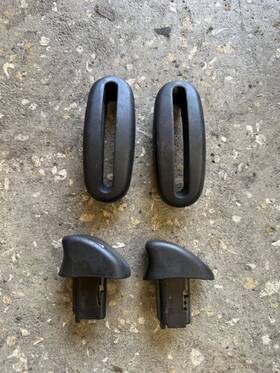
( Part Type: Seat ), ( Country Of Origin: Germany ), ( Oe/oem Part Number: 996-521-423-00; 996.521.423.00; 996 521 423 00 ), ( Placement On Vehicle: Passenger Side, Right ), ( UPC: 575674234521 )
Review PORSCHE Front Seat Release Knob Right fits BOXSTER 911 1997–2004
The **Porsche 575674-23452-1** is an essential, high-quality replacement part designed specifically for the **1997 2004 911 (996) Boxster (986) model**, serving as the **right-hand front seat release knob**. Crafted with Porsche s signature attention to detail, this component ensures seamless functionality while maintaining the iconic aesthetic of the 911 and Boxster lineup. Engineered from durable, premium materials, the knob features a sleek, matte-black finish that blends effortlessly with the interior s premium leather or Alcantara upholstery, preserving the vehicle s refined and sporty ambiance. Its ergonomic design allows for intuitive operation, enabling quick and effortless seat release a critical feature for both practicality and safety during emergency exits or routine maintenance. The part is fully compatible with the original mounting mechanism, ensuring a secure and snug fit without the need for modifications. Whether restoring an original 986 Boxster to its factory specifications or upgrading an existing interior, this genuine Porsche component guarantees authenticity, reliability, and the unmistakable precision associated with the brand. Ideal for enthusiasts seeking to maintain or enhance their vehicle s performance and aesthetics, this seat release knob exemplifies Porsche s commitment to excellence in both form and function.
### **Pros and Cons of Buying a 1997 2004 Porsche 996 Boxster (986) with a Front Seat Release Knob (Part #575674-23452-1)**
#### **Pros**
1. **Classic 996 Boxster Design and Driving Experience**
- The 996 Boxster (986) is a beloved entry into Porsche s roadster lineage, offering a more affordable yet still high-performance alternative to the 911. Its lightweight construction, rear-engine layout, and precise handling make it a joy to drive, especially for enthusiasts who appreciate classic Porsche dynamics.
- The 3.4L (1997 2000) and 3.6L (2001 2004) engines provide adequate power (225 250 hp) for spirited driving, though they lack modern turbocharging. The manual transmission (if available) enhances engagement, while the PDK (2005 ) was not yet introduced in this generation.
2. **Reliability and Durability (With Proper Maintenance)**
- The 996 Boxster is generally robust if maintained regularly. The 3.4L and 3.6L engines are known for longevity, especially when oil changes are done on schedule (every 6,000 8,000 miles) and minor wear items (valve seals, timing chain) are addressed early.
- The 996 s suspension (adjustable in some models) and braking system (with ABS and optional ESP) are well-engineered for its era, though parts wear over time.
- The boxster s simpler construction compared to a 911 means fewer potential failure points, making it more practical for daily use than a high-performance Porsche.
3. **Aftermarket and Customization Potential**
- The 996 has a strong aftermarket support, with readily available parts for upgrades (exhaust, intake, suspension, wheels) and tuning options (Bosch K-Jetronic or Motronic ECU modifications, turbo kits for later models).
- The open-top design allows for easy modifications like paint, interior upgrades, or even conversion to a full convertible (though this requires careful attention to weatherproofing).
- The 996 s body style (especially the 2001 facelift) is highly sought after, making it a good investment if you plan to sell later.
4. **Affordability Compared to Other Porsches**
- A 996 Boxster is significantly cheaper than a 911 or a modern Porsche, making it accessible for buyers who want Porsche ownership without the premium price tag.
- Parts and labor costs are lower than for newer models, though specialized Porsche mechanics may still charge a premium.
- Insurance and registration fees are also more reasonable than for a 911 or Cayman.
5. **Convertible Convenience**
- The soft top is a major selling point, offering an open-air driving experience that s hard to replicate in a modern car. The mechanism is generally reliable, though some models (especially early 1997 1999) may require occasional lubrication or belt replacements.
- The seat release knob (part #575674-23452-1) is a common item for owners to replace if worn or broken, as it s used to disengage the seatbelt for top-down access.
6. **Resale Value and Collectibility**
- The 996 Boxster holds its value well, especially lower-mileage examples with complete service histories. The 2001 2004 models (with the 3.6L engine and minor styling updates) are particularly desirable.
- As a transitional model between the 993 and 997 generations, it s a favorite among collectors who appreciate Porsche s evolution.
---
#### **Cons**
1. **Aging Technology and Comfort**
- The 996 lacks modern driver aids like advanced stability control (ESP was optional but not as sophisticated as today s systems), adaptive cruise control, or lane-keeping assist. This can be a safety concern in heavy traffic or adverse conditions.
- The interior is basic by today s standards, with hard plastic trim, a stiff seat (especially the driver s seat), and limited ergonomics. The manual seat adjustments (if available) are not as refined as modern power seats.
- The soft top can be drafty and noisy at highway speeds, and the top mechanism may require occasional maintenance.
2. **Engine and Transmission Limitations**
- The naturally aspirated 3.4L and 3.6L engines produce less power than modern turbocharged Porsches, making them feel underpowered by today s standards. The 3.6L (2001 ) is slightly more refined but still lacks the punch of a modern flat-six.
- The manual transmission (if equipped) is precise but can feel stiff compared to modern multi-speed automatics. The PDK (introduced in 2005) offers better shift quality, but the 996 s transmission is a single-clutch manual or a basic 5-speed auto.
- Fuel economy is modest by today s standards (around 18 22 MPG combined), and the car s weight (around 2,800 3,000 lbs) makes it less efficient than lighter modern roadsters.
3. **Maintenance and Repair Challenges**
- While the 996 is reliable, it requires **regular and thorough maintenance** to avoid costly failures. Key areas to monitor include:- **Timing chain and tensioner** (especially on the 3.4L engine; the 3.6L is more reliable but still needs attention).
- **Valvetronic system** (variable intake valve control) can fail, leading to rough idle or stalling.
- **Water pump and thermostat** (often fail around 80,000 100,000 miles; a common issue in the 996).
- **Soft top components** (belts, rollers, and seals degrade over time and may need replacement).
- **Brake system** (rear calipers and rotors wear out quickly due to the car s weight distribution).
- Finding a **qualified Porsche specialist** can be expensive, though many independent mechanics are familiar with the model.
- Some parts (e.g., original soft top components) can be hard to source and may require aftermarket replacements.
4. **Rust and Body Issues**
- The 996 is prone to **rust**, particularly in the wheel arches, rocker panels, and rear subframe. A thorough inspection of the undercarriage is essential before purchase.
- The body panels (especially the hood and fenders) can develop stone chips and paint delamination over time, requiring touch-ups or repainting.
- The 996 s design is not as aerodynamic as later models, leading to higher wind noise at highway speeds.
5. **Driving Limitations**
- The rear-engine layout means the car s weight is skewed toward the back, which can make it feel less stable at high speeds or in tight corners compared to a front-engine roadster.
- The suspension is stiff and tuned for sportiness, which can make daily commuting uncomfortable on rough roads.
- The lack of modern traction control can make the car feel less forgiving in slippery conditions (rain, snow, or loose surfaces).
6. **Soft Top Reliability**
- The seat release knob (part #575674-23452-1) is a common point of failure. If it s worn or broken, it can make it difficult to disengage the seatbelt for top-down access. Replacing it is a simple job but highlights the need for regular maintenance.
- The soft top itself can leak water into the cabin if not properly sealed, leading to mold or electrical issues over time.
7. **Environmental and Practical Drawbacks**
- The open-top design means the car is vulnerable to weather, dirt, and debris, which can accumulate quickly.
- Parking a convertible can be more challenging in urban areas due to space constraints and the need to secure the top.
- The lack of modern tech (Bluetooth, USB ports, large touchscreens) may be frustrating for daily use, though this is less of an issue for enthusiasts who prioritize driving experience over convenience.
---
### **Conclusion**
The **1997 2004 Porsche 996 Boxster (986)** is a fantastic choice for buyers who:- **Prioritize driving enjoyment and classic Porsche charm** over modern amenities.
- **Are willing to invest time and money in maintenance** to keep the car running smoothly.
- **Appreciate the open-top experience** and don t mind the trade-offs in comfort and technology.
- **Want a more affordable Porsche** that still delivers exhilarating performance and a strong aftermarket support network.
However, it is **not ideal** for those who:- **Need a daily driver with modern safety and convenience features** (e.g., advanced driver aids, large infotainment screens).
- **Are unwilling to budget for regular maintenance** (timing chain, water pump, soft top, brakes).
- **Prefer a more refined or luxurious experience** (the 996 s interior is basic by today s standards).
- **Live in areas with harsh winters** (though the Boxster can be
Details:
1997 2004 PORSCHE 911 996 BOXSTER 986 FRONT SEAT RELEASE KNOB RIGHT, Removed from 2000 Porsche Boxster, Used condition shows signs of use and minor imperfections. If you don't see a specific part listed please send me message as inventory changes daily.
part #: 575674234521 prices
- $32.00-$49.95
specifications seainterio:
- for models: 911, Boxster
- for makes: Porsche
- for years: 1997-2004
- part type: Seat
- country of origin: Germany
- oe/oem part number: 996-521-423-00; 996.521.423.00; 996 521 423 00
- placement on vehicle: Passenger Side, Right
- upc: 575674234521
returns seainterio:
- time: 30 Days
- paid by: Buyer
- policy: Returns Accepted
shipping seainterio:
- service: Economy
- type: Fixed
- cost: $0.00
- class: Economy
- transit: 6-16 Days
payments seainterio:
- other
- wallet: Google-pay
- credit card: Diners-club
seller seainterio:
- city: Port Charlotte, Florida
- # reviews: 986
- rating: 100.0%
general seainterio:
- condition: Used
- Interior Parts Accessories > Seats, Parts Accessories > Seats
offer seainterio:
- options: Ship-to-home
- started: April 1, 2026
- sold: 0
- availability: In Stock
- best offers: True
- quantity: 1
Porsche 575674-23452-1 Is Similar To:
- 00007797 Genuine Porsche Repa Seat Belt Tongue Set (30.3% similar) If for any reason you are not satisfied please and we'll discuss it do anything on our part to accommodate. Good luck on any of your future porsche endeavors. Please do so prior to making the purchase. Pleasure doing business with you. Good condition. Please pay close attention to all of the ...(April 28th, 2018)
- 01.80054.0 Genuine Porsche Repa Seat Belt Tongue Set (29.9% similar) Please pay close attention to all of the pictures. Pleasure doing business with you. If for any reason you are not satisfied please and we'll discuss it do anything on our part to accommodate. Please do so prior to making the purchase. Good condition. Good luck on any of your future porsche ...(April 28th, 2018)
- 0180 5540 Genuine Porsche Repa Seat Belt Tongue Set (30.1% similar) Good luck on any of your future porsche endeavors. Please pay close attention to all of the pictures. Pleasure doing business with you. Please do so prior to making the purchase. Good condition. If for any reason you are not satisfied please and we'll discuss it do anything on our part to ...(April 28th, 2018)
- 1964-65 Front Door Panels Porsche Original Coupe 356c Sc Seats (23.6% similar) Only the parts in the pictures are included in this set. I'm sure they will go right into a and probably some earlier years. You can get the seats, door panels and upper trim pieces, rear seat back assemblies, upper trim pieces for the rear seats, panel behind rear seats, and rear seat cushions...(August 15th, 2015)
- 35656027 Porsche Used Left Outer Seat Mechanism (31% similar) Porsche used 356A left outer seat mechanism 35659027B...(July 17th, 2018)
- 356b T6 Porsche Seats 356 Bottom 356sc Seat Cushi Rear 356c T5 Sc (32.7% similar) All others please with zip code for shipping quote. The cushions are in fair condition and the horse hair is dry from age and sitting. By appointment only please. For sale is pair of left and right used rear lower seat bottom or cushions for a porsche 356 coupe...(July 17th, 2015)
- 434394-086 Roadire Porsche Boxster Leather (32.3% similar) Don't miss this great buy on road wire custom leather seat covers for your porsche restoration costing over never installed sold the car. The color mist grey and information about these covers can be seen on road wire web site they have factory attachments to install porsche std seats not sport seat...(November 19th, 2017)
- 64452100103 Porsche Set Of Seat Cores For Cars (28.1% similar) Cog 0413 cog yard...(March 23rd, 2019)
- 64452103600 Porsche Nos Lower Seat Rail Springs (34.1% similar) Never installed, it doesn't get any nicer than nos. Don't snooze...(March 28th, 2019)
- 64452119101 Stoddard Pair New Porsche Seat Recliner Rubber Buffers (25.7% similar) Weir spreeing porsche. This can be shipped anywhere worldwide. 01 as used on 356B T-6 356C 356SC and model's. Please see pictures...(December 26th, 2018)
- 64452130106 Porsche Used Seat Guide Rails Esw Sold As Eac (28.8% similar) Porsche used seat guide rails 6ESW 911 912SOLD as each...(April 6th, 2018)